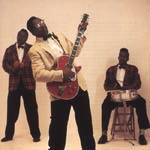
 Roots In the 50s, during rock's infancy, rock was a dance / pop love song oriented genre. A
generic song was a two-to-three minute AABA number with a sax carrying The B part. This was despite
the progenitors Bo Diddley & Chuck Berry's focus on the guitar. The Texas swing
mongers like Bill Haley defined the mainstream sound. Rock instrumental music in the mainstream arena
was likewise was sax based. There were a few notable exceptions, of course. The exceptions to this
tended to be the early Rockabilly artists, who did not use a sax very often, substituting guitar for
the B parts.
Roots In the 50s, during rock's infancy, rock was a dance / pop love song oriented genre. A
generic song was a two-to-three minute AABA number with a sax carrying The B part. This was despite
the progenitors Bo Diddley & Chuck Berry's focus on the guitar. The Texas swing
mongers like Bill Haley defined the mainstream sound. Rock instrumental music in the mainstream arena
was likewise was sax based. There were a few notable exceptions, of course. The exceptions to this
tended to be the early Rockabilly artists, who did not use a sax very often, substituting guitar for
the B parts.
Link Wray probably understood sustain and ominous tones better than anyone. He used Bo Diddley's trick of slitting the speaker cones with his pocket knife to get a ragged-edged distortion. He wrote for the guitar, and created that all too familiar growl we've all grown to love. His tunes were simple, and relied on minor changes to hold interest, like The gradual increase in vibrato toward the end of Jack The Ripper. Link didn't use a sax, but rather arranged all parts for guitar.
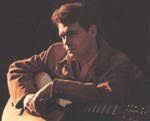 Duane Eddy's basic string-of-single-notes melodies focused on the guitar in a voice developed
mostly by Al Casey. Duane reversed the standard rock AABA (GGSG) arrangement, using his lead
guitar in the A parts, with Steve Douglas' sax lines relegated to the B parts.
Duane Eddy's basic string-of-single-notes melodies focused on the guitar in a voice developed
mostly by Al Casey. Duane reversed the standard rock AABA (GGSG) arrangement, using his lead
guitar in the A parts, with Steve Douglas' sax lines relegated to the B parts.
The Fireballs were a 2 guitar-bass-drums unit recorded by the legendary Norman Petty at his Clovis, New Mexico studio. Their carefully balanced lead-rhythm interplay would clear the way for many to follow, most notably Paul Johnson's Belairs.
The Gamblers were a studio amalgam of Derry Weaver, Sandy Nelson, Leon Russell, and other LA studio musos who issued an influential single called Moondawg c/w LSD 25. Moondawg was re-recorded a million times over the years, even by Paul Revere & The Raiders, attesting to it's power.
The Ventures also paved the highway with a 2 guitar-bass-drums lineup. Their versions of other peoples songs & hits were a staple in the surf band diet, not as a part of the genre, but as a foundation. During their "surf" period, they did not even play the musically correct instruments for the surf sound, still using their Mosrite guitars and reverbs. The shallowness of their surf stuff is due in part to this omission of authenticity, and to their generally laid back playing style. They contributed accidentally after Nokie Edwards joined with several strong tunes like Sputnik which became Surf Rider when the Lively Ones covered it, and later with the surf-arranged Diamond Head, filtered through their "me too" surf approach.
Link Wray, Duane Eddy, Derry Weaver, Nokie Edwards, Chet Atkins, Les Paul, And Fireball George Tomsco were early models for many a surf guitar player.
There were some startlingly wonderful guitar dominated releases coming out of normally sax or keyboard based bands.
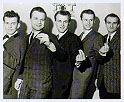 Johnny & The Hurricanes used cheap organ or sax leads mostly (Johnny Paris was the
sax player & leader), but on wonderful occasions focused more on Dave Yorko's grand guitar
lines, such as in the magnificent Sheba or Sandstorm. The sense of melody rather than
simple progressions was really well developed here.
Johnny & The Hurricanes used cheap organ or sax leads mostly (Johnny Paris was the
sax player & leader), but on wonderful occasions focused more on Dave Yorko's grand guitar
lines, such as in the magnificent Sheba or Sandstorm. The sense of melody rather than
simple progressions was really well developed here.
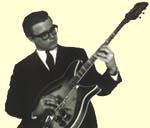 Jody Reynolds' stuff was strongly guitar oriented. His band The Storms were very good
on their own. Their instrumental Thunder was an Al Casey - Duane Eddy styled instro
commonly credited as an inspiration by early surf bands.
Jody Reynolds' stuff was strongly guitar oriented. His band The Storms were very good
on their own. Their instrumental Thunder was an Al Casey - Duane Eddy styled instro
commonly credited as an inspiration by early surf bands.
The rockabilly and garage band source bed was loaded with riff oriented guitar indie singles. Thousands of them issued between 1956 and 1960. Most were just progressions with nowhere to go, but some notable exceptions were brilliant. Typhoid by the Northern Lights, a 1960 staccato double picked rant later reissued as Bust Out by the Busters to capitalize on the surf sound, could arguably be the first surf styled tune recorded, much closer to the eventual defined genre than Dick Dale's Let's Go Trippin' or the Belairs' Mr. Moto, and a year earlier in release. It's main shortfall is its lack of reverb and a surf title, but, neither Let's Go Trippin' or Mr. Moto had reverb or a surf title for that matter. Ghost Train by the Millionaires is another really cool instro. The Frogmen's Underwater also falls into this pre-surf instrumental bag that often gets confused with The genre. It was, after all, pre-Belairs & Dick Dale.
Surf Music Invented
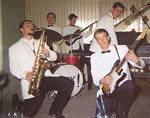 Paul Johnson and Eddie Bertrand met in 1960 on the school bus in their childhood Southern
California community. After discovering a mutual interest in instrumentals and guitars, they formed
what would be The nucleus the Belairs. They idolized the Storms, Duane Eddy, Link Wray,
The Fireballs, The Ventures, and Johnny & The Hurricanes. They soon had a band with Richard
Delvy on drums, Chas Stuart on sax, and Jim Roberts on piano sometimes. In May
of 1961, They recorded Mr. Moto, a mutual composition of Paul Johnson and Richard
Delvy, along with several other tunes. They hawked them around LA until Arvee Records agreed
to release a single that summer. Paul also wrote many surf classics like Squad Car, Scouse,
and Chifflado. Paul's sound became known as the South Bay Sound, spawning and inspiring
many other bands in the region like the Challengers & Thom Starr & The Galaxies.
Paul Johnson and Eddie Bertrand met in 1960 on the school bus in their childhood Southern
California community. After discovering a mutual interest in instrumentals and guitars, they formed
what would be The nucleus the Belairs. They idolized the Storms, Duane Eddy, Link Wray,
The Fireballs, The Ventures, and Johnny & The Hurricanes. They soon had a band with Richard
Delvy on drums, Chas Stuart on sax, and Jim Roberts on piano sometimes. In May
of 1961, They recorded Mr. Moto, a mutual composition of Paul Johnson and Richard
Delvy, along with several other tunes. They hawked them around LA until Arvee Records agreed
to release a single that summer. Paul also wrote many surf classics like Squad Car, Scouse,
and Chifflado. Paul's sound became known as the South Bay Sound, spawning and inspiring
many other bands in the region like the Challengers & Thom Starr & The Galaxies.
Dick Dale idolized Hank Williams and that sad country music. He was a left handed player with a right handed guitar, upside down without re-stringing. He played at local country bars where he met 400 pound DJ T. Texas Tiny, who dubbed him Dick Dale, a good name for a country singer. Art Laboe booked him with Johnny Otis and Sonny Knight at the El Monte Legion Stadium. His first releases were on his father's Deltone label, and were all vocal pop songs. In early '61, Dick & his cousin & future Del-Tone Ray Samra sat in with Nick O'Malley, who played folk songs at The Rinky Dink coffee house in Balboa.
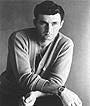 Future Del-Tone Billy Barber came by and jammed too. Dick's style was still very country, but
the surf kids liked him. Nick showed Dick how to set tone switch in between positions, which gave
him an element of his big sound. Dick opened Rendezvous Ballroom in Balboa on July 1st,
1961 to a handful of surfers. Leo Fender used Dick as a test player because of his harsh playing
style. Dick blew up 40 Showman amps before the bugs were worked out. Leo also developed The JBL
Speaker because of Dick's playing those 60 gage E strings in that staccato style. Let's Go
Trippin' was written because some kid said something like "why do you do only vocals, can
you play any instrumentals?" Dick set at the time was mostly rhythm & blues standards (Buster
Brown, Bo Diddley, etc.). Let's Go Trippin' went unnamed for some weeks until he
said to his audience that he didn't know what to call it, and they yelled back "Let's Go Trippin'" (shut
up & play, we wanna dance - ed.). It was recorded in August 1961, but then re-cut for release
in September 1961 on Deltone 5017 Let's Go Trippin' c/w Deltone Rock (both primarily
rockabilly instrumentals), followed by Deltone 5018 Jungle Fever c/W Shake & Stomp in
March '62.
Future Del-Tone Billy Barber came by and jammed too. Dick's style was still very country, but
the surf kids liked him. Nick showed Dick how to set tone switch in between positions, which gave
him an element of his big sound. Dick opened Rendezvous Ballroom in Balboa on July 1st,
1961 to a handful of surfers. Leo Fender used Dick as a test player because of his harsh playing
style. Dick blew up 40 Showman amps before the bugs were worked out. Leo also developed The JBL
Speaker because of Dick's playing those 60 gage E strings in that staccato style. Let's Go
Trippin' was written because some kid said something like "why do you do only vocals, can
you play any instrumentals?" Dick set at the time was mostly rhythm & blues standards (Buster
Brown, Bo Diddley, etc.). Let's Go Trippin' went unnamed for some weeks until he
said to his audience that he didn't know what to call it, and they yelled back "Let's Go Trippin'" (shut
up & play, we wanna dance - ed.). It was recorded in August 1961, but then re-cut for release
in September 1961 on Deltone 5017 Let's Go Trippin' c/w Deltone Rock (both primarily
rockabilly instrumentals), followed by Deltone 5018 Jungle Fever c/W Shake & Stomp in
March '62.
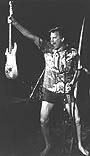 In April of 1962, he released Surfers Choice from live tapes made by his father at the Rendezvous.
Dick's sound would become known as the Orange County Sound. Jungle Fever was the music
bed for Bo Diddley's Hush Your Mouth. Dick even left some of the lyrics in on the album
when he called it Surfin' Drums. It is unfortunate that Dick still takes writing credit for
this song.
In April of 1962, he released Surfers Choice from live tapes made by his father at the Rendezvous.
Dick's sound would become known as the Orange County Sound. Jungle Fever was the music
bed for Bo Diddley's Hush Your Mouth. Dick even left some of the lyrics in on the album
when he called it Surfin' Drums. It is unfortunate that Dick still takes writing credit for
this song.
In the beginning, surf music was not about surfing, it was simply the adoption by surfers of instrumentals. Anything instrumental was surf music in their minds. That may or may not give surfers the right to redefine it at their convenience. More about that later. The definition narrowed quickly to include only the Orange County Sound and the South Bay Sound, and in hindsight, primarily the Orange County Sound.
Very quickly, it became apparent that the best players & writers were not surfers, many not living anywhere near a coast. Thom Starr's remembrance is that Dick Dale was barely able to get up for the photo on the cover of Surfer's Choice, and the shot on the cover of King Of The Surf Guitar is rumored to be in a pool.
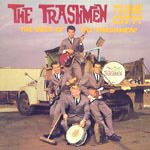 Surf Music became a sound, and appealed to non-surfers more than surfers. The only exception to this
was Southern California and Hawaii, but even there, though many of the surfers won't think so, the
best stuff often came from the non-surfers. Bands like Eddie & The Showmen, The Trashmen, The
Surfaris, The Original Surfaris, The Belairs, The Sentinals, and the Astronauts were all
primarily non-surfing bands playing and creating killer surf instrumental music loved by millions
of non-surfing fans. Hell, the Astronauts were from Boulder Colorado, and the Trashmen were
from Minneapolis, Minnesota, and the Royal Flairs were from Council Bluffs, Iowa!
Surf Music became a sound, and appealed to non-surfers more than surfers. The only exception to this
was Southern California and Hawaii, but even there, though many of the surfers won't think so, the
best stuff often came from the non-surfers. Bands like Eddie & The Showmen, The Trashmen, The
Surfaris, The Original Surfaris, The Belairs, The Sentinals, and the Astronauts were all
primarily non-surfing bands playing and creating killer surf instrumental music loved by millions
of non-surfing fans. Hell, the Astronauts were from Boulder Colorado, and the Trashmen were
from Minneapolis, Minnesota, and the Royal Flairs were from Council Bluffs, Iowa!
 The spoiler came with the Beach Boys, and the entire mass market pop vocal thing they spawned. Doo-Wop styled
syrupy harmonized songs with sappy lyrics about surfing bearing little or no resemblance instrumentally
to actual surf music. This was mostly what the national scene heard and came to know as surf music.
It is more correctly labeled California Sound or Surf Pop. This was both an embarrassment
to the genre, as well as the very reason that the British Invasion could so easily kill it.
The spoiler came with the Beach Boys, and the entire mass market pop vocal thing they spawned. Doo-Wop styled
syrupy harmonized songs with sappy lyrics about surfing bearing little or no resemblance instrumentally
to actual surf music. This was mostly what the national scene heard and came to know as surf music.
It is more correctly labeled California Sound or Surf Pop. This was both an embarrassment
to the genre, as well as the very reason that the British Invasion could so easily kill it.
Had the BB's not softened the genre with the vocal thing, or had they provided The raw Midwest vocal approach, the raw power of surf music would have been able to hold its own against the roughness of the British R&B of the formative Rolling Stones,
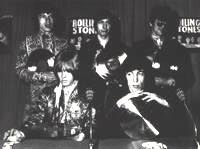 Animals & Pretty Things, and even against the pop sensibilities of the Beatles & their
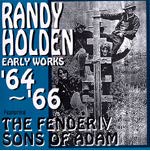
ilk. Among the reasons I believe this to be true is the number of surf guitarist that evolved into
really gutsy garage punk & psychedelic players later, like the incredible Randy Holden and Dave
Myers, and the fact that the only band the Rolling Stones ever had to be subservient to
on the bill in the U. S. was Minneapolis surf legends the Trashmen!
Animals & Pretty Things, and even against the pop sensibilities of the Beatles & their
ilk. Among the reasons I believe this to be true is the number of surf guitarist that evolved into
really gutsy garage punk & psychedelic players later, like the incredible Randy Holden and Dave
Myers, and the fact that the only band the Rolling Stones ever had to be subservient to
on the bill in the U. S. was Minneapolis surf legends the Trashmen!
With an average genre lasting 8 to 10 years, 2 to be born, another couple to coalesce, 2 for adolescence and break out of the narrowness of the birth channel definition, and then 4 or 5 to explode multi-directionally until new seeds are sown and other new genre are born. This familiar pattern is ever-present in music. Surf was cut down in it's infancy by its own childish sappy vocals and the raw edge of the British Invasion.
The Surf Revival of the 80s (actually started in 79) was primarily a nostalgia thing, with some updating via 80s energy. It wasn't until the last couple of years that bands started challenging the limits, some successfully, some not. On the verge of its experimental explosion, the envelope is being pushed to its limits by artists like the Mermen who have evolved steadily over 5 or 6 years from raging covers of surf classics and obscuros to a heady blend of surf & Hawkwind influenced space to incredibly artful image evoking works.