Suppose you have this little four piece combo with a few friends. Two of you play guitar, one plays bass, and one plays drums, and some of you sing. Pretty standard fair. Most bands start out like this. Your band is different, though. Not by intent, but by limitation. Your vocal performances are met with winces & calls to "shut up" 'cuz the gods of serendipity have granted your entire entourage a complete and utter lack of singing talent. Undaunted, you continue your performance, but without singing, thus avoiding a lynching. You've reinvented the rock instrumental, or maybe you are the Ventures.
 The Ventures set the model for instrumental
bands for a long time to come, and several elements of their structure & styling were
key elements of surf. But, surf did not exist yet. When it was "invented" (read "labeled"),
some folks wanna go back & say "hey, this is surf too." But is it?
The Ventures set the model for instrumental
bands for a long time to come, and several elements of their structure & styling were
key elements of surf. But, surf did not exist yet. When it was "invented" (read "labeled"),
some folks wanna go back & say "hey, this is surf too." But is it?
Maybe you're the Fireballs, and your doing the same basic thing the Ventures are doing, only earlier and in another part of the country. Maybe some 15 year old is listening an saying "Hey, I can do that, and call myself the Belairs." Does that make your music surf?
Suppose you're a back up band for sappy pop singers in Britain in the late fifties. Suppose when he shuts up you play instrumentals. Suppose you're the Shadows. Major influence, right? But, does that make it surf?
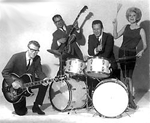 Jody
Reynolds' band the Storms did killer instrumentals like "Thunder" in
the Al Casey style (Al was in the Storms in-studio) used to such great effect by Duane
Eddy, and this all happened before there was "surf." So when some snot-nosed
17 year old surf punk yelled out "Let There Be Surf," did that include Jody
Reynolds?
Jody
Reynolds' band the Storms did killer instrumentals like "Thunder" in
the Al Casey style (Al was in the Storms in-studio) used to such great effect by Duane
Eddy, and this all happened before there was "surf." So when some snot-nosed
17 year old surf punk yelled out "Let There Be Surf," did that include Jody
Reynolds?
In nature, evolution occurs through successful mutation. In technology, it is often the recombining of existing elements in a different way, or the introduction of a single new element. So it is with music. When rock 'n' roll slammed onto the scene, it was neither new or different than that which had been bubbling underground for a long time. When grunge suddenly became the darling of the record business, it was not because it had just happened, but rather that they had just discovered that which was already there. Mid eighties Seattle bands like Green River were doin' it then in a mere micro step of evolution away from what had happened earlier in Minneapolis with bands like Hüsker Dü, who were just a few steps away from...and so it goes. The question that evolution raises is one driven by various perspectives...where does surf start & rock instro end?
It's like this. A band later labeled "surf" learns tunes by their early influences the Ventures & the Fireballs, then write originals a mere micro step away. Once labeled "surf," does that move the envelope of what is surf back to include the influences? Think of it this way. If you are standing in a blacksmith shop & notice that the hot metal is giving of light, and you think "hey, maybe I could heat metal to illuminate the night, and could call it a light bulb," does that make blacksmithing part of the electric light genre? The answer is, of course not. But that's what we try to do with music. We confuse the roots of the genre with the genre. The genre can't pre-exist, but rather is just an envelope on the timeline of evolution, the boundaries of a Jurassic age.
 Surfbands have been pushing the envelope
of what is surf since the beginning. It's not unlike other genres. It began with a few disparate
styles that had little more than a lack of lyrics in common. It got a name from it's audience,
again a common theme. Over the year or so, the sound scope narrowed as the definition became
clear. Styles included originally would have been rejected had they happened later. The whole
South Bay sound would probably not be included in hind-sight had it developed after the Orange
County sound.
Surfbands have been pushing the envelope
of what is surf since the beginning. It's not unlike other genres. It began with a few disparate
styles that had little more than a lack of lyrics in common. It got a name from it's audience,
again a common theme. Over the year or so, the sound scope narrowed as the definition became
clear. Styles included originally would have been rejected had they happened later. The whole
South Bay sound would probably not be included in hind-sight had it developed after the Orange
County sound.
This happens to all genre. rockabilly began as little more than energetic electric country. If we apply what we have all come to think of as rockabilly to many of the early recordings, we simply identify them as country, not as rockabilly. That does not make it correct, but rather just exemplifies that narrowing that yields to the archetypal sound of any genre.
Then, as more time passes, the practitioners begin playing with sounds, just slightly, and just one day at a time, and begin introducing influences from various other genre. One day, its not that genre at all, but yet another new sound. That is the normal evolutionary cycle.
 Lots of new seeds, then a weeding out of the weakest, and finally
a re-seeding to begin again, just like in nature.
Lots of new seeds, then a weeding out of the weakest, and finally
a re-seeding to begin again, just like in nature.
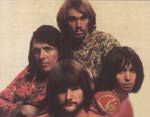 In the sixties, examples of surfbands pushing
the envelope include the latter-day Bel-Aires (Steve Lotto's line-up), the Fender
IV, the Index, and Iron Butterfly.
In the sixties, examples of surfbands pushing
the envelope include the latter-day Bel-Aires (Steve Lotto's line-up), the Fender
IV, the Index, and Iron Butterfly.
The latter day Bel-Aires (their spelling, not mine) also did some expanding. From Paul Johnson's original South Bay sound, defined by the delicate balance between lead and rhythm, evolved a post-Johnson chunkiness, a grinding rhythmic sound in "Charley Chan" and a sparse stop/start kind of approach with a differently applied whammy bar in "Baggies." On it's own, it might not even be thought of as surf if it were not for the band's heritage.
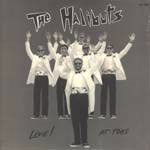
LA's Fender IV did two completely different things with their Orange County sound foundation. One was the introduction of a prominent ska back beat, a trend not realized in surf fully until the Halibuts generous use of it in the eighties. One of the best examples from the Halibuts is their version of the Fender IV's "Malibu Run." The other was injecting the use of a really heavy droning lead that literally thunders along in their "Mar Gaya," a song now covered (worshipped) by many modern surfbands including the Trashwomen, the Treble Spankers, and the Firebirds. This heavy drone is just a stone's throw away from
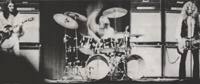 Blue Cheer's "Summertime
Blues."
Blue Cheer's "Summertime
Blues."
The third & fourth examples are the late "post-surf" work from two bands with unique approaches to the same idea. It's really difficult to draw the line where surf ends and psych begins. Case in point is the Index, whose "Israeli Blues"
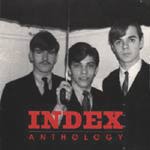 uses surf guitars in
a most unusual off-time way, and combined with feedback their "Shockwave" is
neither psychedelic or surf, as you might guess from the title. Even farther a-field is their
use of surf guitars with a wonderful version of the Byrds' "Eight Miles
High." If that's not strange enough for you, listen carefully to Iron Butterfly,
a much maligned band whose best known for the dreadful "Inna Gadda Da Vida," but
whose recordings are full of surf guitars and reverb kicks. Just listen to the end of "Iron
Butterfly Theme" or most of "Filled With Fear." When
did it stop being surf and begin being psych?
uses surf guitars in
a most unusual off-time way, and combined with feedback their "Shockwave" is
neither psychedelic or surf, as you might guess from the title. Even farther a-field is their
use of surf guitars with a wonderful version of the Byrds' "Eight Miles
High." If that's not strange enough for you, listen carefully to Iron Butterfly,
a much maligned band whose best known for the dreadful "Inna Gadda Da Vida," but
whose recordings are full of surf guitars and reverb kicks. Just listen to the end of "Iron
Butterfly Theme" or most of "Filled With Fear." When
did it stop being surf and begin being psych?
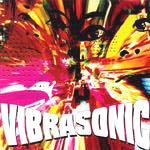 Vibrasonic represent what Pink Floyd would
have been like had they come out of surf instead of the Blues & "Louie Louie." Great
early Floydian organ and swirly psychedelic guitar playing the surfiest likes known to man...but
if you didn't know what you were looking for, you might miss it. Their "The Surfin'
Secret Agent A Go-Go," "Sea Of Stars," and "Tijuana
Marijuana" are pure surf drowning in psychedelic swirls.
Vibrasonic represent what Pink Floyd would
have been like had they come out of surf instead of the Blues & "Louie Louie." Great
early Floydian organ and swirly psychedelic guitar playing the surfiest likes known to man...but
if you didn't know what you were looking for, you might miss it. Their "The Surfin'
Secret Agent A Go-Go," "Sea Of Stars," and "Tijuana
Marijuana" are pure surf drowning in psychedelic swirls.
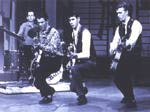
The Ventures can't really be considered as surfband, yet they did some surf tunes and used "the sound" during one of their many chameleonic transformations. They are often the first band that comes to mind for many. Why is that? They recorded precious little surf, probably less than 5% of their output. Their two guitar-bass & drums format & The use of the whammy bar were foundationally significant to the development of surf, but they came before it & never quite fit, so are they a surfband? They did give us surfband standards like "Walk, Don't Run," and "Diamond Head."
 The Fireballs likewise were a Ventures-esq
band, but they did not change styles like dirty underwear. The same basic configuration,
but more country. After all, they were from the South West, not Seattle/Tacoma. There's reverb,
damped notes, and some of their tunes were recorded and played by many surfbands, most notably "Rik-A-Tik."
The Fireballs likewise were a Ventures-esq
band, but they did not change styles like dirty underwear. The same basic configuration,
but more country. After all, they were from the South West, not Seattle/Tacoma. There's reverb,
damped notes, and some of their tunes were recorded and played by many surfbands, most notably "Rik-A-Tik."
The Shadows provide a clearer distinction. They are the primary progenitors of the European guitar
 instrumental
sound. I can find almost no surf influence in them or from them, yet there are those that
include them without batting an eye. Where's the reverb, the glissandos & the double
picking?
instrumental
sound. I can find almost no surf influence in them or from them, yet there are those that
include them without batting an eye. Where's the reverb, the glissandos & the double
picking?
Laika & the Cosmonauts used to record some pretty surfy stuff, though they owed a lot to the Shadows. Now, they mostly do Euro guitar & spy themes. I'm not sure they ever really were a surfband, but rather that they just did some surf tunes. Still, I like 'em & play 'em on my show. So, why aren't they surf?
 Los Straitjackets are tougher to differentiate.
They ride a line between that Nashville cowboy twang and surf is clouded by their material
which also ranges from classic surf to spy themes to Spaghetti Western. So, when the do the Exports' "Car
Hop" or
Los Straitjackets are tougher to differentiate.
They ride a line between that Nashville cowboy twang and surf is clouded by their material
which also ranges from classic surf to spy themes to Spaghetti Western. So, when the do the Exports' "Car
Hop" or  Danny Amis' first penned tune from his days
with the Overtones, it's easy to say surf, but it gets a bit harder when they cough
through "The Magnificent Seven" (Marlboro Man TV ad
theme) or obscuro jaunt through the John Lennon / George Harrison penned "Cry
For A Shadow," and nearly impossible when the do their rockabilly rants or Link
Wray numbers.
Danny Amis' first penned tune from his days
with the Overtones, it's easy to say surf, but it gets a bit harder when they cough
through "The Magnificent Seven" (Marlboro Man TV ad
theme) or obscuro jaunt through the John Lennon / George Harrison penned "Cry
For A Shadow," and nearly impossible when the do their rockabilly rants or Link
Wray numbers.